

Customer loyalty is built through the small experiences that give people a reason to choose your business again. For cafés, restaurants, bakeries, takeout shops and other local businesses, a simple loyalty card can be an affordable way to encourage repeat visits and show customers that their support is appreciated.
You don't need an expensive rewards platform or complicated software to get started. A well-designed loyalty card and a custom rubber stamp can provide a straightforward system that customers understand and staff can manage during a busy day.
In this guide, we'll look at how to create a practical customer loyalty program, design a card that people want to keep, and use loyalty card stamps to make the process easier.
What Is a Customer Loyalty Program?
A customer loyalty program rewards people for returning to your business and making repeat purchases. The reward might be a free coffee, a discount on a future order, a complimentary product or another benefit that makes customers feel valued.
One of the simplest formats is a stamp card. Customers receive a stamp each time they make an eligible purchase, and once they've collected the required number, they can redeem their reward.
For example, a coffee shop might offer a free coffee after nine paid purchases. A bakery could reward customers with a complimentary pastry, while a takeaway restaurant might offer a discount after a set number of qualifying orders.
The key is to keep the rules easy to understand. Customers should know how to earn stamps, how many they need and what they receive at the end.
5 Steps to Creating a Loyalty Card Program
1. Choose a Reward That Makes Sense for Your Business
Start by identifying a reward that customers will appreciate and that your business can afford to offer.
A useful reward doesn't have to be expensive. It simply needs to give customers a clear incentive to return.
Consider these examples:
- Coffee shops: A free regular coffee after a set number of purchases.
- Bakeries: A complimentary baked good after a series of qualifying purchases.
- Restaurants and takeout businesses: A discount or free menu item after a specified number of visits.
- Salons and service businesses: A discount on a future appointment after a set number of completed visits.
- Independent retailers: A small gift or discount once customers reach a particular spending or visit threshold.
Before launching your program, work out the cost of the reward and make sure the required number of purchases supports your profit margins.
2. Design a Card Customers Can Use Easily
A loyalty card should be practical, easy to carry and quick to understand. Avoid filling it with too much information or making the reward conditions difficult to follow.
Include the essentials:
- Your business name or logo.
- A clear heading explaining the loyalty program.
- Spaces for each stamp.
- A short description of the reward.
- Any important conditions, such as eligible purchases or expiry dates.
Keep the stamp spaces large enough for clear impressions, and leave sufficient room between them. This helps staff stamp the correct space without marking neighbouring sections.
Your loyalty card is also a small piece of branded material that customers may carry in their wallets or bags for weeks. Consistent use of your logo, colours and typography helps reinforce your business identity every time the card is used.
3. Choose the Right Loyalty Card Stamp
Once your card layout is ready, choose a stamp that fits the available space and suits your daily workflow. A self-inking loyalty card stamp is particularly convenient because the ink pad is built into the stamp. Staff can make repeated impressions without reaching for a separate ink pad, which is useful during busy periods.
At GetStamps.ca's loyalty card stamp collection, businesses can choose from compact stamps in different shapes and sizes. Options include small square impressions and round designs, making it easier to find a stamp that works with your card layout.
When choosing your stamp, consider the following:
Size: A smaller stamp works well when the card has several reward spaces. Check the maximum impression size against the dimensions of your card.
Design: A simple logo, symbol or small graphic can make the card recognisable without overcrowding the layout. Choose artwork with clear lines and enough detail to reproduce well at a small size.
Ink colour: Select an ink colour that contrasts with the card stock and complements your branding. Test the impression on the actual card material before ordering large quantities.
Ease of use: If several employees will use the stamp, choose a comfortable, straightforward design that can handle frequent stamping throughout the day.
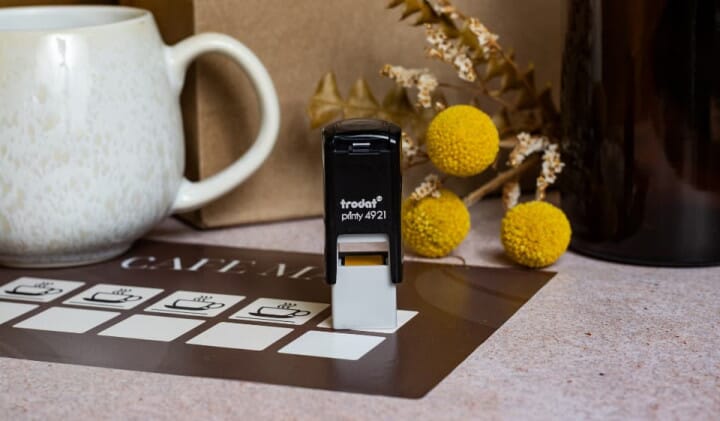
For example, the Loyalty Card Stamp measuring 1/2" x 1/2" is designed for small, clear impressions on loyalty cards. It is a compact self-inking option for businesses that need a quick way to mark each qualifying purchase.
One important detail: loyalty card stamps are suitable for non-glossy paper. Test your chosen card stock to check that the ink dries properly and produces a crisp impression.
4. Make the Process Simple for Your Staff
A loyalty program should be easy to run during a busy shift. If it takes too long to explain or requires several steps at the till, staff may forget to use it consistently.
Establish a few straightforward rules before launching:
- Decide which purchases qualify for a stamp.
- Explain the program to staff so everyone follows the same process.
- Keep the stamp near the point of sale.
- Give customers their stamp at the appropriate point in the transaction.
- Make the reward and redemption process clear to everyone.
It's also worth deciding how your business will handle lost cards, expired cards or customers who reach the reward threshold over several visits. Clear rules help avoid confusion and ensure customers receive consistent service.
A self-inking stamp makes the stamping process quick and repeatable. It also keeps the separate ink pad off the counter, helping maintain a tidier checkout area.
5. Promote the Program and Track Its Performance
A loyalty card only works when customers know it exists. Introduce the program at checkout, display a small sign near the counter and mention it on your social media channels.
Train staff to explain the benefit in a sentence or two. For example, they could tell customers how many purchases are needed to earn a reward and invite them to collect their first stamp.
Once the program is running, review its performance. You don't need sophisticated analytics to get started. Track a few practical measures:
- How many customers join the program?
- How many cards are completed and redeemed?
- Which rewards are most popular?
- Do loyalty customers appear to return more frequently?
- Does the cost of the reward make financial sense?
You can also ask customers for feedback. Their responses may help you adjust the reward, card design or qualifying purchase requirements.
Remember that a loyalty card is one part of the customer experience. Friendly service, consistent quality and a reliable product still matter most when encouraging people to return.
Why Rubber Stamps Work Well for Small Business Loyalty Programs
Digital rewards systems can offer useful features, but they may require software, setup time or ongoing fees. A paper loyalty card offers a simpler alternative for businesses that want to start small.
A custom rubber stamp provides several practical benefits:
Affordable setup: You can introduce a loyalty program without investing in a dedicated digital rewards platform.
Easy daily use: Staff can mark cards quickly at the point of sale, even during busy periods.
Consistent branding: A custom design can include your logo or a recognisable symbol that ties the program to your business.
Flexible design: You can create a card around your own reward structure, brand identity and preferred number of stamp spaces.
Straightforward maintenance: A self-inking stamp has an integrated ink pad, and replacement pads are available when the original pad needs changing.
For small businesses testing a loyalty program for the first time, this combination of simplicity and flexibility makes stamped cards a practical starting point.
Common Loyalty Program Mistakes to Avoid
Even a simple loyalty program needs a little planning. Avoid these common mistakes when setting yours up.
Making the reward too difficult to earn. If customers feel the target is unrealistic, they may lose interest before completing their cards.
Offering a reward that costs too much. Work out the numbers before launching so the program remains sustainable.
Using a stamp that is too large. An oversized impression can obscure card details or overlap neighbouring spaces.
Choosing glossy card stock without testing it. Some glossy surfaces prevent stamp ink from drying properly, which can lead to smudging.
Leaving the rules unclear. State the qualifying purchases, reward and any restrictions in plain language.
Failing to tell customers about the program. A loyalty card cannot encourage repeat purchases if customers don't know it is available.
A little preparation helps your program feel organised from the first customer interaction.
Frequently Asked Questions
What is the purpose of a loyalty card stamp?
A loyalty card stamp marks a qualifying purchase or visit. Customers collect a set number of impressions to qualify for a reward, such as a free item or discount. A custom stamp can also reinforce your branding through a logo or recognisable design.
Which rubber stamp is best for loyalty cards?
A compact self-inking stamp is a practical choice because it is easy to use repeatedly and doesn't require a separate ink pad. The best size and shape depend on the dimensions of your card and the design you want to reproduce.
Can I put my business logo on a loyalty card stamp?
Yes. Custom loyalty card stamps can be designed around your logo or artwork. Use a clear design that remains legible at a small impression size, and check the artwork requirements before uploading your file.
Can I use a loyalty card stamp on any paper?
Not every paper surface produces the same result. Glossy paper can cause smudging or slow drying, so non-glossy card stock is generally a suitable choice for these stamps. Test your chosen material before printing a full batch of cards.
Are paper loyalty cards still useful for small businesses?
Yes. Paper cards remain a straightforward option for businesses that want a simple rewards system without relying on a digital platform. They are particularly practical when customers make purchases in person and staff can stamp cards at checkout.
Start Building Customer Loyalty With a Simple System
A successful loyalty program doesn't have to be complicated. Start with a worthwhile reward, a clearly designed card and a stamping process your staff can manage consistently. Then review the results and make adjustments as you learn what your customers value.
For businesses that want to introduce a practical rewards program, a custom loyalty card stamp is an easy place to start.
Explore the GetStamps.ca loyalty card stamps collection to find a suitable option for your card design and give customers another reason to return.